Ancient civilizations looked to the heavens not merely for wonder, but for order. The celestial dance of the moon and sun provided humanity with its first reliable method of measuring time, creating calendars that shaped religious practices, agricultural cycles, and social organization across millennia.

From Mesopotamian ziggurats to Mayan pyramids, from Stonehenge to the temples of ancient China, ritual timekeeping systems emerged independently yet shared remarkable similarities. These lunar, solar, and lunisolar calendars didn’t simply mark days—they connected human existence to cosmic patterns, creating rhythms that governed when to plant, when to celebrate, and when to commune with the divine.
🌙 The Fundamental Difference: Lunar, Solar, and Lunisolar Systems
Understanding ancient calendars requires grasping three distinct approaches to measuring time. Each system emerged from careful observation of celestial bodies, yet each prioritized different astronomical phenomena based on cultural needs and environmental factors.
Lunar calendars follow the moon’s phases, with months beginning at the new moon or crescent moon. A complete lunar cycle takes approximately 29.5 days, creating months that alternate between 29 and 30 days. Pure lunar calendars contain roughly 354 days annually, falling about 11 days short of the solar year.
Solar calendars, conversely, track the sun’s apparent movement through the sky, measuring the time between successive equinoxes or solstices. This solar year contains approximately 365.25 days, aligning closely with seasonal cycles crucial for agriculture.
Lunisolar calendars represent humanity’s ingenious compromise, incorporating both lunar months and solar years. These complex systems add intercalary months periodically to keep lunar months aligned with solar seasons—a mathematical challenge that ancient astronomers solved with remarkable precision.
Ancient Mesopotamia: Where Calendar Science Began
The Babylonians created one of history’s most sophisticated lunisolar calendars around 1800 BCE. Their system formed the foundation for Jewish, Christian, and Islamic timekeeping traditions that persist today.
Babylonian astronomers observed that 19 solar years nearly equal 235 lunar months—a relationship known as the Metonic cycle. By inserting seven intercalary months over this 19-year period, they maintained alignment between lunar months and solar seasons with extraordinary accuracy.
Each Babylonian month began with the first visible crescent moon following the new moon. Priests stationed on temple rooftops watched the western horizon at sunset, declaring the new month’s arrival upon sighting the slender lunar arc. This observational method meant calendar dates weren’t predetermined but declared in real-time based on actual celestial observation.
Religious Festivals and Cosmic Timing ⭐
Babylonian religious life revolved around their lunisolar calendar. The Akitu festival, celebrating the new year, occurred during the spring equinox, requiring precise astronomical calculations to ensure proper timing. The festival’s twelve days symbolized the twelve months, with elaborate rituals reenacting creation myths and reaffirming the king’s divine mandate.
Monthly festivals marked the new moon, full moon, and seventh day of each month. These weren’t arbitrary celebrations but reflected deep cosmological beliefs about favorable and unfavorable times for various activities—agriculture, warfare, construction, and religious offerings all followed calendar-prescribed timing.
The Jewish Calendar: Continuity Across Millennia
The Hebrew calendar descends directly from Babylonian astronomical traditions, refined during the Babylonian exile (586-538 BCE). Today’s Jewish calendar maintains essentially the same lunisolar structure established over two millennia ago, demonstrating remarkable calendrical continuity.
Unlike modern fixed calendars, the Jewish calendar continues ancient traditions of aligning human time with celestial rhythms. Months begin with the new moon, and years follow a 19-year Metonic cycle with seven intercalary months added in years 3, 6, 8, 11, 14, 17, and 19.
This mathematical structure ensures that Passover always falls in spring, Sukkot in autumn, and other festivals maintain their seasonal associations—critical connections between religious observance and agricultural cycles embedded in biblical law.
Ritual Observance and Calendar Consciousness
Jewish ritual life cultivates acute calendar awareness. Observant Jews track both the lunar month and weekly Sabbath cycle, creating overlapping temporal rhythms. Rosh Chodesh, marking each new month, remains a minor festival with special prayers and liturgical additions.
The High Holy Days demonstrate the calendar’s religious centrality. Rosh Hashanah occurs on the new moon of the seventh month, while Yom Kippur follows ten days later. These dates aren’t merely historical commemorations but cosmologically significant moments when, according to tradition, divine judgment and mercy reach their annual peak.
☀️ Solar Calendars: Egypt’s Gift to Modern Timekeeping
While Mesopotamia perfected lunisolar systems, ancient Egypt developed history’s earliest purely solar calendar around 2900 BCE. Egyptian astronomers noticed that Sirius rose heliacally (just before sunrise) approximately every 365 days, coinciding with the Nile’s annual flood—the event upon which Egyptian civilization depended.
The Egyptian civil calendar contained twelve 30-day months plus five additional “epagomenal” days, totaling 365 days. This simple structure ignored lunar phases entirely, creating a calendar misaligned with both moon and seasons since the actual solar year is 365.25 days.
This quarter-day discrepancy meant the Egyptian calendar drifted through the seasons, completing a full cycle every 1,460 years—a period called the Sothic cycle. Remarkably, Egyptians maintained this system for millennia despite its obvious seasonal drift, suggesting calendar stability held greater cultural value than seasonal accuracy.
Religious Time in the Land of the Pharaohs
Egyptian religious observances followed multiple overlapping calendars. While the civil calendar governed administration, a separate lunar calendar determined many festival dates. Temples maintained their own ritual calendars specifying daily offerings, processions, and ceremonies for different deities.
The five epagomenal days held special mythological significance as birthdays of major deities: Osiris, Horus, Set, Isis, and Nephthys. These liminal days, belonging to neither the old nor new year, were considered particularly magical and dangerous—a temporal threshold requiring special rituals and precautions.
Chinese Lunisolar Traditions: Harmony Between Heaven and Earth 🏮
Chinese calendar systems developed independently from Western traditions yet arrived at remarkably similar lunisolar solutions. The traditional Chinese calendar, still used alongside the Gregorian calendar for festivals and astrology, demonstrates sophisticated astronomical knowledge dating back over three millennia.
Chinese astronomers divided the solar year into 24 solar terms (jieqi), marking 15-degree intervals along the sun’s ecliptic path. These solar terms indicated agricultural timing: “Awakening of Insects,” “Clear and Bright,” “Grain in Ear,” and others provided farmers precise seasonal guidance regardless of lunar month dates.
Months remained lunar, beginning at the new moon, with intercalary months added seven times per 19-year cycle to maintain seasonal alignment. The Chinese New Year falls on the second new moon after the winter solstice, ensuring its occurrence between late January and mid-February.
Celestial Mandate and Imperial Authority
In Chinese cosmology, calendar accuracy demonstrated the emperor’s heavenly mandate. Imperial astronomers held crucial positions, responsible for predicting eclipses and maintaining calendar precision. Calendar errors could undermine imperial legitimacy, suggesting lost cosmic favor.
The emperor ceremonially “granted” the calendar each year, distributing almanacs throughout the empire. This ritual act symbolically extended imperial authority across space and time, organizing not just territory but temporal experience itself according to the emperor’s cosmic role as mediator between heaven and earth.
Mayan Mathematical Brilliance: Multiple Calendars, Sacred Time
Mayan civilization developed Mesoamerica’s most sophisticated calendrical systems, utilizing multiple interlocking calendars simultaneously. This complex temporal framework reflected Maya cosmology, where time itself was divine, cyclical, and imbued with spiritual significance.
The Haab was a 365-day solar calendar containing 18 months of 20 days plus a 5-day period called Wayeb, considered unlucky and dangerous. Simultaneously, Mayans used the Tzolk’in, a 260-day ritual calendar combining 13 numbers with 20 day names, creating 260 unique day designations.
These calendars meshed like interlocking gears, creating the Calendar Round—a 52-year cycle after which any particular Tzolk’in date would recur on the same Haab date. Additionally, the Long Count tracked days from a mythological creation date (corresponding to August 11, 3114 BCE in the Gregorian calendar), enabling historical dating across vast time spans.
Ritual Timing and Cosmic Cycles 🔮
Each Tzolk’in day carried specific auguries, qualities, and patron deities determining its auspiciousness for various activities. Maya daykeepers—specialized calendar priests—consulted the Tzolk’in for timing ceremonies, agricultural work, warfare, marriage, and naming children.
The 260-day Tzolk’in cycle may derive from human gestation (approximately nine lunar months) or agricultural cycles in highland Guatemala. Some scholars propose astronomical origins related to Venus cycles or zenith passage intervals at certain latitudes. Regardless of origin, the Tzolk’in structured Maya religious life, creating a sacred rhythm independent of solar or lunar cycles.
Islamic Lunar Calendar: Pure Lunar Timekeeping 🕌
Islam adopted a pure lunar calendar, explicitly rejecting intercalation in the Quran. This decision created a calendar fundamentally different from the lunisolar systems surrounding early Islamic civilization, emphasizing religious distinctiveness and universal applicability regardless of seasonal or agricultural context.
The Islamic calendar contains twelve lunar months totaling 354 or 355 days. Because no intercalary months maintain alignment with solar seasons, Islamic months migrate backward through the solar year, completing a full cycle every 33-34 years. Ramadan, the fasting month, consequently occurs during all seasons over a person’s lifetime.
This seasonal independence carries theological significance. Islamic practices remain unchanged by agricultural cycles or climate, making the religion equally applicable in diverse geographical contexts from tropical Indonesia to arctic regions experiencing extreme seasonal variation.
Moon Sighting and Community Ritual
Traditional Islamic practice begins each month upon actual sighting of the new crescent moon. Communities gather at sunset on the 29th day of each month, scanning the western horizon for the thin lunar arc. This observational method perpetuates ancient Babylonian practices, maintaining direct connection between celestial observation and calendar determination.
The moon sighting ritual transforms calendar keeping into communal religious practice. It requires patience, attentiveness, and trust in human observation over mathematical calculation—values central to Islamic tradition. Modern debates about calculation versus observation reflect tensions between traditional practice and contemporary efficiency.
🌍 Modern Applications: Ancient Wisdom in Contemporary Practice
While the Gregorian solar calendar dominates international commerce and civil life, ancient lunar and lunisolar systems remain vitally important for billions of people worldwide. These calendars aren’t historical curiosities but living traditions shaping religious observance, cultural identity, and agricultural practice.
Farmers in traditional communities worldwide still plant and harvest according to lunar phases, believing moon cycles affect plant growth, sap flow, and crop yields. Whether through actual astronomical influence or accumulated traditional knowledge encoded in lunar timing, these practices maintain ancient agricultural rhythms.
Religious communities continue following ancient calendars for festival observance. Easter’s date calculation uses lunisolar principles inherited from Jewish Passover timing. Diwali follows the Hindu lunisolar calendar. Chinese New Year, Ramadan, Rosh Hashanah—billions of people organize significant portions of their lives around calendar systems thousands of years old.
Digital Tools for Ancient Rhythms 📱
Modern technology enables unprecedented access to traditional calendars. Smartphone applications calculate Jewish, Islamic, Chinese, and Hindu calendar dates, display moon phases, and provide festival reminders. These tools democratize knowledge once restricted to specialized priests and astronomers.
For practitioners seeking to align their lives with traditional timekeeping systems, these applications bridge ancient wisdom and contemporary convenience. They make visible the multiple temporal rhythms our ancestors tracked simultaneously, revealing the rich complexity beneath the single calendar most modern people follow.
Reclaiming Cyclical Time in Linear Culture
Ancient calendar systems embody fundamentally cyclical time consciousness. Months, years, and longer cycles repeat eternally. Spring always returns, the moon forever waxes and wanes, festivals recur annually. This cyclical understanding contrasts sharply with modern linear time consciousness, where progress moves unidirectionally toward an ever-receding future.
Engaging with traditional calendars can reconnect modern people with cyclical temporal experience. Observing moon phases, noting solstices and equinoxes, celebrating festivals aligned with celestial events—these practices cultivate awareness of natural rhythms obscured by standardized, mechanical time measurement.
This reconnection offers psychological and spiritual benefits increasingly recognized in contemporary wellness movements. Seasonal awareness, lunar consciousness, and ritual timing provide structure and meaning beyond the relentless forward march of clock-measured productivity.
The Mathematical Poetry of Calendar Making ✨
Ancient calendar systems represent humanity’s earliest complex mathematics, combining observation, pattern recognition, and predictive calculation. The Metonic cycle, solar terms, intercalation schemes—these mathematical relationships emerged from sustained celestial observation across generations.
Calendar mathematics possessed both practical and sacred dimensions. Accuracy enabled agricultural planning and ritual timing, while the mathematical relationships themselves revealed cosmic order and divine design. The numerical harmony between lunar and solar cycles appeared miraculous, evidence of intentional creation rather than random occurrence.
Modern people, accustomed to accurate clocks and standardized time zones, rarely appreciate the intellectual achievement ancient calendars represent. These systems required sustained observation, intergenerational knowledge transmission, and mathematical sophistication—all accomplished without telescopes, computers, or atomic clocks.
Preserving Calendar Diversity in a Globalized World
Globalization pressures traditional calendars toward obsolescence. International business, digital communication, and global travel all favor calendar standardization. The Gregorian calendar’s worldwide adoption reflects practical necessity more than cultural imperialism, yet this standardization risks eroding calendar diversity and the cultural knowledge embedded within traditional systems.
Preserving traditional calendars preserves more than mere date-keeping methods. These systems contain astronomical knowledge, agricultural wisdom, cultural values, and religious meaning accumulated across millennia. When calendar traditions disappear, entire frameworks for understanding time, nature, and humanity’s cosmic place vanish with them.
Supporting calendar diversity requires more than nostalgic preservation. It means recognizing that multiple valid approaches to temporal organization exist, each reflecting different cultural priorities and environmental relationships. Ancient calendar wisdom remains relevant, offering alternatives to standardized, mechanized time consciousness dominating contemporary life.
Living by Ancient Rhythms: Practical Steps Forward 🌙
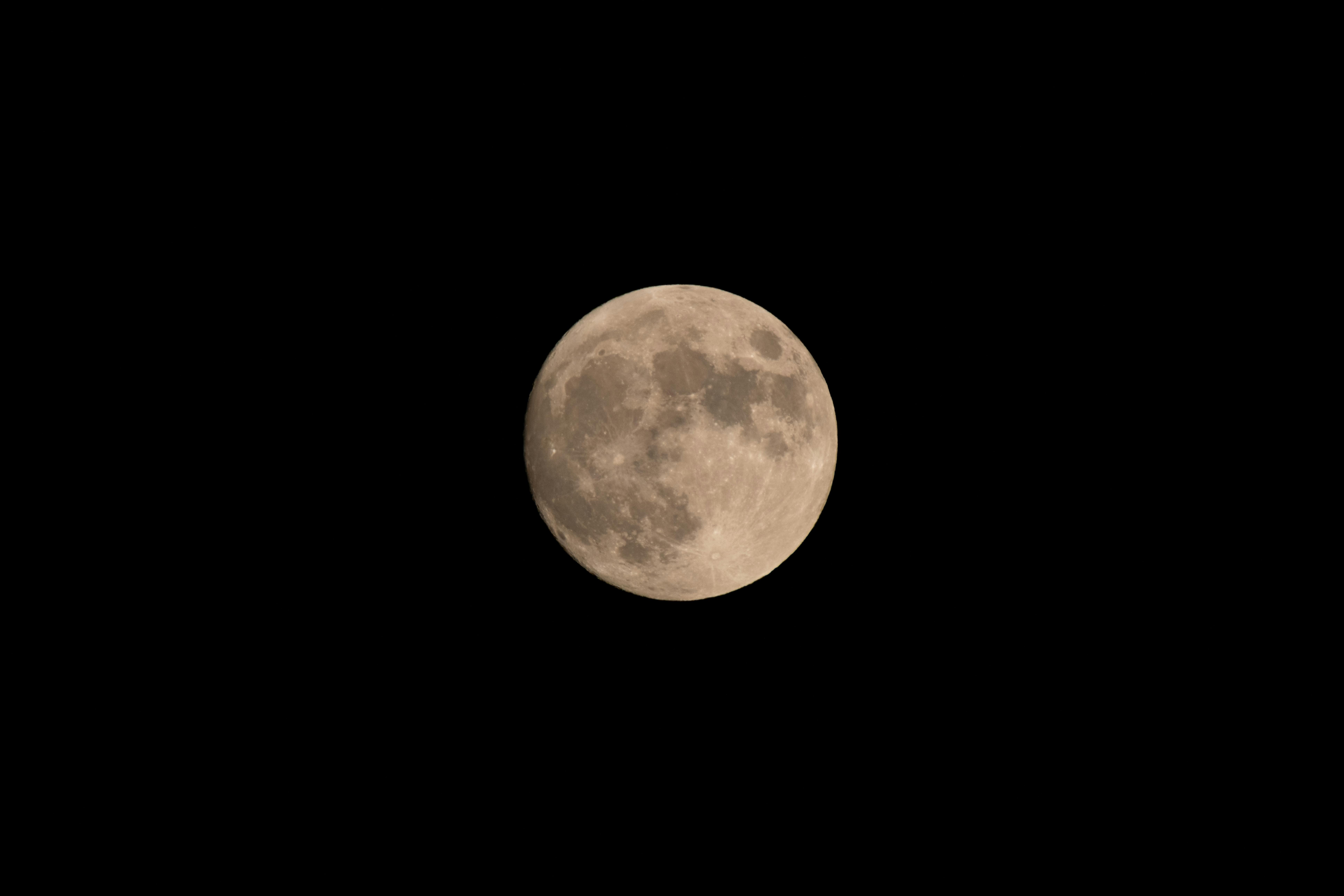
Individuals seeking connection with traditional timekeeping can begin simply. Observing moon phases cultivates lunar awareness—notice the new moon, watch it wax toward fullness, observe its waning. This practice alone reconnects observers with the most ancient human calendar.
Learning the festivals and observances of traditional calendars provides structure and meaning throughout the year. Even without religious affiliation, marking solstices, equinoxes, and quarter-days (midpoints between solstices and equinoxes) creates seasonal awareness and celebration opportunities.
Exploring one’s own ancestral calendar traditions can deepen cultural connection. Whether Jewish, Chinese, Hindu, Maya, Celtic, or any other tradition, researching how ancestors measured time reveals worldview, values, and cosmic understanding passed through generations.
Ancient calendar systems represent humanity’s first sustained scientific endeavor—a blend of observation, mathematics, and meaning-making that connected earthly life with celestial rhythms. These systems weren’t merely practical tools but sacred technologies encoding cultural wisdom, astronomical knowledge, and spiritual insight. By exploring and engaging with traditional calendars, modern people can unlock ancient rhythms still pulsing beneath standardized time, discovering temporal wisdom that remains profoundly relevant thousands of years after its initial creation.